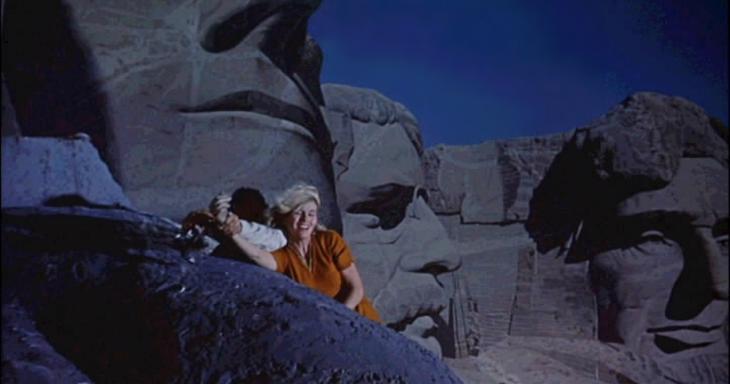
Which Alfred Hitchcock film featured the national monument Mount Rushmore?
The correct answer is North by Northwest. Alfred Hitchcock’s 1959 thriller uses Mount Rushmore for its climactic chase sequence.
North by Northwest is the answer. Alfred Hitchcock’s 1959 MGM thriller starred Cary Grant, Eva Marie Saint, and James Mason, with its mistaken-identity story building toward one of the director’s most famous climaxes at Mount Rushmore.
Hitchcock’s 1959 Thriller
North by Northwest was released in 1959 and directed by Alfred Hitchcock. Cary Grant starred as Roger Thornhill, a New York advertising executive pulled into danger after being mistaken for someone else. Eva Marie Saint played Eve Kendall, while James Mason played Phillip Vandamm, giving the film a central cast tied closely to its suspense, deception, and pursuit structure.
The Mistaken-Identity Plot
The story begins when Thornhill is wrongly believed to be a government agent. That mistake sends him into a chase involving spies, false identities, and shifting loyalties. The mistaken-identity setup gives North by Northwest much of its momentum, since Thornhill spends the film trying to understand why he has been targeted and how to survive the danger around him.
The Mount Rushmore Climax
Mount Rushmore appears in the film’s famous climactic sequence. The monument gives the final chase a dramatic national landmark setting, but the most dangerous-looking action was not actually performed on the carved presidential faces. Hitchcock used the monument’s image, studio-controlled work, and carefully staged suspense to make the scene feel larger and more dangerous than a realistic location shoot would allow.
Recognition Beyond the Monument Scene
North by Northwest is widely recognized as one of Hitchcock’s major suspense films because it combines a high-profile cast, a mistaken-identity thriller plot, and memorable set pieces. The Mount Rushmore climax is its best-known landmark sequence, while the crop-duster scene is another major example of the film’s visual suspense. Those concrete scenes, along with Grant’s lead performance and Hitchcock’s direction, keep North by Northwest closely associated with classic Hollywood thriller filmmaking.
Ready for another challenge?
Start a 10-question challenge and test your knowledge of classic films, actors, directors, movie quotes, and Hollywood history.
Start the Challenge