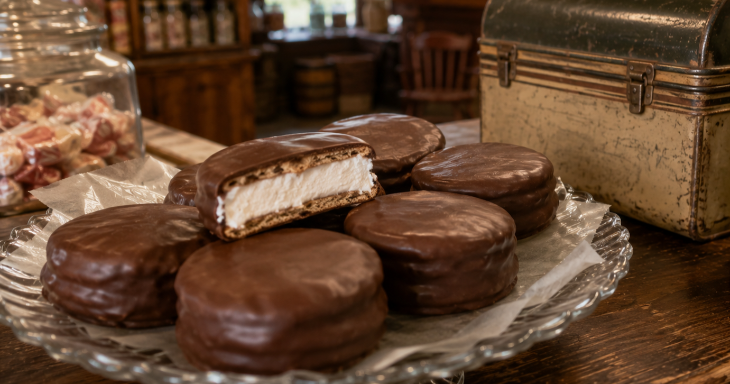
The correct answer is MoonPie. Chattanooga Bakery introduced the popular Southern treat in Chattanooga, Tennessee, in 1917.
MoonPie is the popular Southern treat introduced in 1917 by the Chattanooga Bakery in Chattanooga, Tennessee. The snack became known for its simple but memorable combination of round graham cookies, marshmallow filling, and a flavored coating, most famously chocolate. Over time, MoonPie grew from a regional bakery product into one of the most recognizable snack cakes in the American South.
The story of MoonPie begins with the Chattanooga Bakery, which was part of the larger Mountain City Flour Mill operation. In the early 20th century, the bakery made cookies and other baked goods for local and regional customers. According to the company’s traditional origin story, a bakery salesman named Earl Mitchell asked coal miners what kind of snack they wanted for their lunch pails. The miners wanted something filling, inexpensive, and easy to carry. One miner is said to have held his hands up to the moon when describing how big the snack should be. That image helped inspire the name MoonPie.
The original MoonPie fit the needs of working people. It was portable, sweet, sturdy, and affordable. Coal miners, factory workers, farmers, and schoolchildren could carry it without needing utensils or refrigeration. The graham cookie layers gave it structure, the marshmallow made it soft and sweet, and the coating helped hold everything together. It was not fancy, but it was practical and satisfying.
MoonPie became especially connected with the South because of its price, availability, and pairing with RC Cola. For decades, the combination of an RC Cola and a MoonPie was a familiar Southern snack. The pairing became part of regional food culture, especially in country stores, gas stations, lunch counters, and small-town groceries. It was inexpensive enough for children and workers, and it had the kind of staying power that made it more than just another packaged sweet.
The standard MoonPie has changed very little in concept. It is still built around the same basic idea of graham cookies and marshmallow filling. The classic chocolate version remains the best known, but other flavors appeared over the years, including vanilla, banana, strawberry, and salted caramel. Mini MoonPies and double-decker versions also expanded the line. The double-decker MoonPie, with extra cookie and marshmallow layers, became especially popular for people who wanted a larger snack.
MoonPie also became tied to celebrations and local identity. In Mobile, Alabama, a large MoonPie is dropped during New Year’s Eve festivities, a Southern variation on the Times Square ball drop. The snack is also associated with Mardi Gras parades, where MoonPies are often thrown from floats to crowds. That tradition helped strengthen its place in Gulf Coast culture, where it became both a treat and a symbol of local celebration.
Part of MoonPie’s lasting appeal comes from nostalgia. Many people remember buying one at a corner store, eating one in a lunchbox, or seeing them stacked near the cash register at small shops. The packaging, round shape, and soft marshmallow center all give it a strong old-fashioned identity. It belongs to the same world as soda fountains, general stores, roadside markets, and simple packaged snacks from before the age of huge snack aisles.
The treat’s name also helped it stand out. “MoonPie” is short, memorable, and easy to picture. It suggests something big, round, and familiar, which fits the product well. The name has become so recognizable that it now carries a cultural meaning beyond the snack itself. It suggests Southern comfort food, old-fashioned sweets, and a piece of everyday Americana.
The correct answer is MoonPie. Introduced by the Chattanooga Bakery in 1917, it became a beloved Southern snack through its affordable price, portable design, marshmallow-and-graham-cookie flavor, and long association with RC Cola, Mardi Gras parades, and small-town stores.
Start a 10-question trivia challenge and see how many classic snacks, candies, cereals, restaurants, desserts, and food brands you know.
Start the Challenge