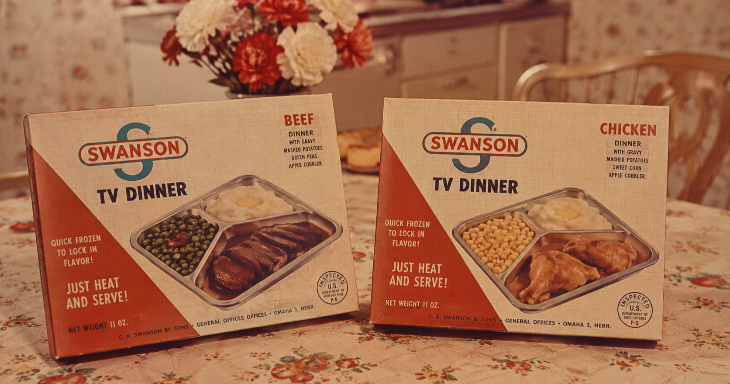
Which food company first successfully introduced TV dinners to the masses in the 1950s?
The correct answer is Swanson. C.A. Swanson & Sons made TV dinners a mass-market frozen meal in the 1950s.
Swanson is the answer. C.A. Swanson & Sons successfully brought TV dinners to a mass U.S. audience with frozen meals packaged in aluminum trays, promoted as postwar convenience food that fit neatly with supermarket shopping, home freezers, and the growing place of television in American household life.
The Frozen Dinner That Caught On
C.A. Swanson & Sons introduced the Swanson TV Brand Frozen Dinner in 1953. Early Swanson TV dinners are commonly associated with a Thanksgiving-style meal that included turkey, dressing, peas, and sweet potatoes. Swanson was not the first company to sell frozen meals of any kind, but it was the company that made the TV dinner a widely recognized mass-market product.
Why the Aluminum Tray Mattered
The compartmentalized aluminum tray helped give the frozen dinner its practical identity. Each part of the meal could be separated, frozen, heated, and served in the same container. That format made TV dinners feel different from ordinary leftovers or canned foods because the meal was pre-portioned, organized, and designed for easy oven heating.
Television Culture and Convenience Food
The “TV dinner” name connected the product to the rapid spread of television in 1950s American homes. The meal fit postwar trends such as freezer ownership, convenience cooking, and packaged foods that required little preparation. Swanson’s success came from combining a frozen dinner format with marketing that made the meal feel modern, simple, and suited to the way many families were changing their evening routines.
Ready for another challenge?
Start a 10-question trivia challenge and test your knowledge of classic snacks, cereals, candies, restaurants, desserts, and food brands.
Start the Challenge