Classic Food Trivia Question
A retro dessert history question about Baked Alaska, meringue, and the hot-and-cold dessert trick.
Classic Food Trivia Question
Question

Which 1950s-era dessert is made with layers of ice cream, sponge cake, and meringue, then baked quickly to brown the outside?

Correct Answer
Baked Alaska

The correct answer is Baked Alaska. It is made with layers of ice cream, sponge cake, and meringue, then baked quickly so the meringue browns while the ice cream stays cold.

Like classic food trivia?
Start a 10-question trivia challenge beginning with a question like this. No signup needed to begin.
Start the Challenge
Why Baked Alaska Is the Correct Answer

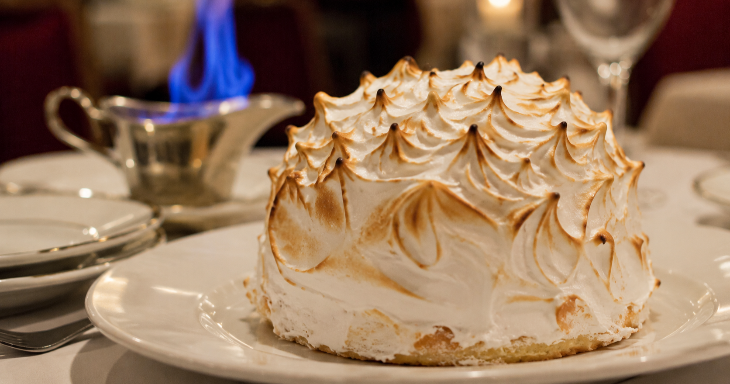
Baked Alaska is the 1950s-era dessert made with layers of ice cream, sponge cake, and meringue, then baked quickly to brown the outside. It is famous because it seems to break the rules of dessert making. Ice cream is placed in the oven, yet it does not immediately melt. The secret is the thick layer of meringue, which insulates the frozen center long enough for the outside to turn golden.

The dessert is usually built on a base of sponge cake or another light cake. A mound or layer of ice cream is placed on top, then the entire dessert is covered with whipped meringue. The meringue must seal the ice cream completely, including the sides where heat could reach the frozen center. Once assembled, the dessert is placed in a very hot oven for a short time, or browned with a kitchen torch, until the meringue develops toasted peaks.

The science behind Baked Alaska is part of its appeal. Meringue is made from egg whites and sugar, beaten until it forms a foam filled with tiny air bubbles. Air does not transfer heat very well, so the meringue works as insulation. The cake layer also helps protect the ice cream from direct heat. Because the oven is very hot and the baking time is brief, the outside browns before the ice cream has time to melt.

Although Baked Alaska is often associated with mid-century dining, its roots go back much earlier. The dessert is commonly linked to Delmonico’s, the famous New York restaurant that helped popularize many elaborate dishes in the 19th century. One tradition connects the name to the United States purchase of Alaska from Russia in 1867. Similar desserts also appeared under names such as “omelette surprise” and “omelette norvégienne,” both referring to the surprising mix of hot and cold.

By the 1950s, Baked Alaska had become the kind of dramatic dessert associated with restaurants, hotels, supper clubs, and special dinner parties. It fit the era’s taste for impressive presentation. A host could bring out a domed white dessert, slice into it, and reveal layers of cake and ice cream beneath the toasted meringue. That visual surprise made it feel elegant and memorable.

Baked Alaska also belonged to a larger mid-century style of showy cooking. Many popular dishes from that period were designed to impress at the table, including molded salads, decorated cakes, chiffon pies, flambéed desserts, and elaborate casseroles. Presentation mattered, especially for holidays and formal dinners. Baked Alaska had the advantage of looking complicated while using familiar ingredients: cake, ice cream, egg whites, and sugar.

Some versions of Baked Alaska are served plain after browning. Others are finished with a flambé effect, where a warmed spirit is ignited for a brief table-side flame. That version added even more drama, especially in restaurants. The flame is not required for the dessert, but it helped reinforce its reputation as a special-occasion finale.

The answer is Baked Alaska. Its lasting reputation comes from the contrast between warm browned meringue and cold ice cream, along with the clever use of meringue as insulation. It remains one of the most recognizable classic desserts because it combines simple ingredients with a surprising result.

More Classic Food Trivia Questions

Ready for another challenge?

Start a 10-question trivia challenge and see how many classic snacks, candies, cereals, restaurants, desserts, and food brands you know.

Start the Challenge
Browse more: Classic Food Trivia