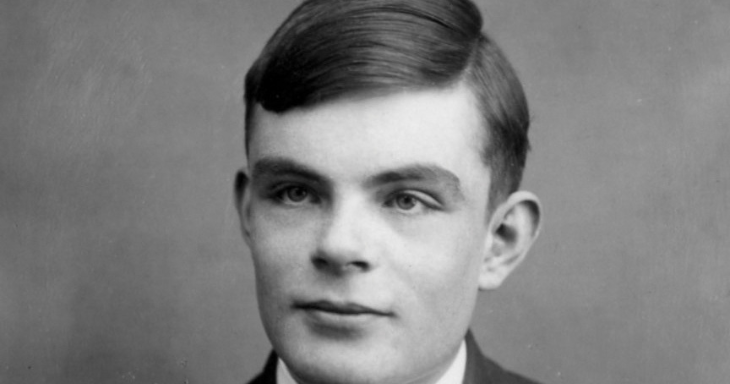
Famous People Trivia Question
A World War II history question about Alan Turing, Bletchley Park, codebreaking, and Enigma.
Famous People Trivia Question
Question

Who cracked the Enigma code during World War II, greatly aiding the Allied effort?

Correct Answer
Alan Turing

The correct answer is Alan Turing. He was one of the key codebreakers at Bletchley Park whose work helped the Allies break German Enigma-encrypted messages during World War II.

Like famous people trivia?
Start a 10-question trivia challenge beginning with a question like this. No signup needed to begin.
Start the Challenge
Why Alan Turing Is the Correct Answer

Alan Turing is widely recognized as one of the key figures who helped crack the Enigma code during World War II, greatly aiding the Allied effort. He did not work alone, and the breaking of Enigma-encrypted messages was the result of a large, secret codebreaking operation involving British, Polish, and other Allied intelligence specialists. Turing’s work at Bletchley Park was central to the effort, especially through his contributions to methods and machines that helped read German military communications.

The Enigma machine was an electromechanical cipher device used by Nazi Germany to encode messages. It looked somewhat like a typewriter, but each keypress sent an electrical signal through a changing system of rotors, wiring, and plugboard connections. The result was a scrambled letter that could be transmitted by radio. To anyone without the correct settings, the message appeared meaningless. Because the machine’s settings changed regularly, the number of possible combinations was enormous.

German forces used Enigma to protect military messages across the army, navy, air force, and intelligence services. These messages included information about troop movements, supply routes, air operations, submarine activity, and battlefield plans. Reading even a portion of those communications could give the Allies a major advantage. That made codebreaking one of the most important hidden battles of the war.

Before British codebreakers made major progress at Bletchley Park, Polish mathematicians had already done crucial work on Enigma. In the 1930s, Polish cryptologists including Marian Rejewski, Jerzy Różycki, and Henryk Zygalski developed important methods for understanding Enigma’s structure and solving messages. They shared their knowledge with Britain and France shortly before the war, giving the Allies a vital starting point. That Polish contribution is an essential part of the Enigma story.

Alan Turing arrived at Bletchley Park in 1939. He was already known for his brilliant mathematical mind and his theoretical work that later became foundational to computer science. At Bletchley Park, he worked in Hut 8, the section focused on German naval Enigma. Naval Enigma was especially important because German U-boats threatened Allied shipping in the Atlantic. If the Allies could read U-boat communications, they could better protect convoys carrying food, fuel, weapons, and troops.

One of Turing’s most famous contributions was his work on the Bombe, a codebreaking machine designed to help find the daily Enigma settings. The British Bombe built on earlier Polish ideas but was adapted and expanded for wartime needs. It did not simply “translate” German messages by itself. Instead, it tested possible Enigma settings at high speed, helping codebreakers narrow the search. Once the correct settings were found, intercepted messages could be decoded.

Turing’s insight was not just mechanical. He helped develop logical methods for attacking the cipher. Codebreakers often relied on clues called “cribs,” which were likely words or phrases expected to appear in a message. German operators sometimes used predictable formats, repeated language, weather reports, or routine military wording. Turing’s methods helped turn those weaknesses into usable attacks against the cipher system.

The intelligence produced from decrypted enemy communications was known as Ultra. Ultra was among the most closely guarded secrets of the war. Allied leaders had to use the information carefully, because if Germany realized Enigma had been broken, it could change its systems and close the intelligence window. This meant that decoded information often had to be disguised as coming from other sources, such as aerial reconnaissance.

The impact of Enigma codebreaking was enormous. It helped the Allies track German U-boats, protect Atlantic convoys, understand enemy plans, and make better strategic decisions. Historians often credit the work at Bletchley Park with shortening World War II, though the exact amount of time is impossible to prove with certainty. What is clear is that reading German military communications gave the Allies an intelligence advantage that saved lives and shaped the course of the conflict.

Turing’s wartime work remained secret for many years after 1945. The public did not immediately know the full scale of what had happened at Bletchley Park or how important Turing’s role had been. After the war, he continued work connected to early computing and artificial intelligence. His ideas about computation, algorithms, and machine intelligence helped lay the groundwork for modern computer science.

The answer is Alan Turing. He was one of the most important codebreakers at Bletchley Park, where his work on cryptography, German Enigma-encrypted messages, and the Bombe helped the Allies read vital military communications during World War II.

More Famous People Trivia Questions

Ready for another challenge?

Start a 10-question trivia challenge and see how many actors, singers, inventors, presidents, authors, athletes, and historical figures you know.

Start the Challenge
Browse more: Famous People Trivia