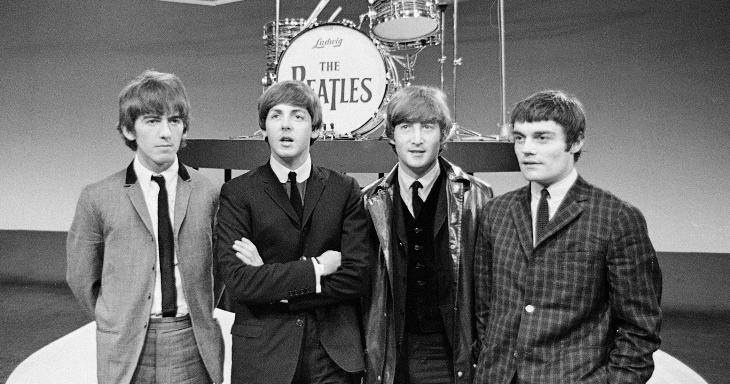
“Ticket to Ride” was a 1960s hit for which British band?
The correct answer is The Beatles. The British band recorded Ticket to Ride for its 1965 Help! film and album period.
The Beatles is the answer. The British band recorded “Ticket to Ride” during its mid-1960s rise, with John Lennon, Paul McCartney, George Harrison, and Ringo Starr carrying the group from British Invasion pop success into a heavier studio sound heard on the 1965 Help! film and album.
The Beatles and the British Invasion
The Beatles were the British band behind “Ticket to Ride.” Their classic 1960s lineup was John Lennon, Paul McCartney, George Harrison, and Ringo Starr. By 1965, the group had already become central to the British Invasion, with records released through Parlophone in the United Kingdom and Capitol Records in the United States.
Ticket to Ride and Help!
“Ticket to Ride” was released in 1965 and appeared in the Beatles film Help! as well as on the Help! album. That connection places the song in the middle of the band’s film-and-album period, when their music was tied closely to screen appearances, singles, and rapidly changing studio work. The song became one of the key tracks associated with that phase of their career.
Lennon-McCartney and the Lead Vocal
“Ticket to Ride” is credited to Lennon-McCartney, the songwriting partnership of John Lennon and Paul McCartney. John Lennon sang the lead vocal on the recording, giving the track its direct and slightly darker emotional tone. The Lennon-McCartney credit connects the song to the writing team behind many of The Beatles’ best-known 1960s recordings.
A Heavier Mid-1960s Beatles Sound
“Ticket to Ride” is often noted for sounding heavier than many earlier Beatles pop singles. Its guitar texture, distinctive drum pattern, and more forceful feel pointed toward the band’s growing interest in studio arrangement and musical experimentation. That makes the song useful for identifying The Beatles not just as a British pop group, but as a band already expanding its sound in the mid-1960s.
Ready for another challenge?
Start a 10-question challenge and test your knowledge of classic songs, singers, albums, lyrics, and music history.
Start the Challenge