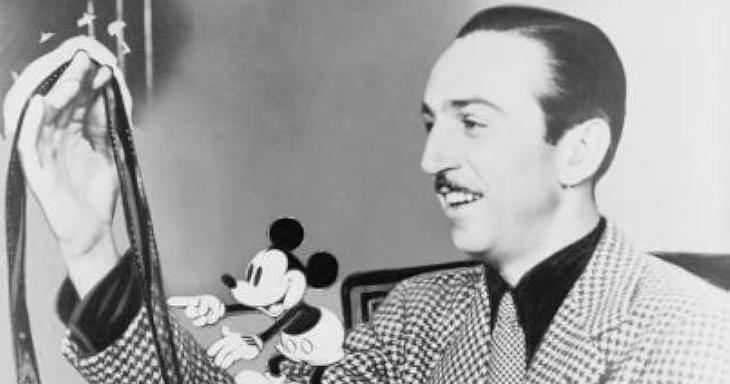
Famous People Trivia Question
An entertainment history question about Walt Disney, animation, Disneyland, and a global theme park empire.
Famous People Trivia Question
Question

Which American entrepreneur and entertainment pioneer, born December 5, 1901, went on to build a global theme park empire?

Correct Answer
Walt Disney

The correct answer is Walt Disney. Born December 5, 1901, he helped transform animation and family entertainment before building the Disney theme park empire.

Like famous people trivia?
Start a 10-question trivia challenge beginning with a question like this. No signup needed to begin.
Start the Challenge
Why Walt Disney Is the Correct Answer

Walt Disney was the American entrepreneur and entertainment pioneer, born December 5, 1901, who went on to build a global theme park empire. He became one of the most influential figures in modern entertainment, first through animation, then through film, television, merchandising, and finally through the creation of Disneyland, the park that helped redefine family entertainment and shaped the future of themed attractions around the world.

Walt Disney was born in Chicago, Illinois, and grew up partly in Missouri and Kansas City. His early life gave him a strong interest in drawing, storytelling, trains, and small-town American imagery, all of which later appeared in his work. As a young man, he pursued commercial art and animation at a time when motion pictures were still developing quickly. Animation was not yet the massive industry it would become, but Disney saw its potential as a way to combine humor, music, emotion, and visual imagination.

Disney’s early career included several setbacks. He started small animation businesses that struggled financially, and he lost control of one of his early cartoon characters, Oswald the Lucky Rabbit. That loss helped push him toward creating a new character with stronger ownership and identity. In 1928, Walt Disney and Ub Iwerks introduced Mickey Mouse, who quickly became one of the most recognizable animated characters in the world. Mickey’s success was boosted by Steamboat Willie, an early synchronized-sound cartoon that showed how sound could transform animation.

From there, Disney helped turn animation into a major part of Hollywood entertainment. His studio produced popular short cartoons, including the Silly Symphonies series, and experimented with color, music, and character-driven storytelling. In 1937, the studio released Snow White and the Seven Dwarfs, the first full-length cel-animated feature film. Many people had doubted that audiences would sit through a feature-length cartoon, but the film became a huge success and proved that animation could carry a full dramatic story.

The success of Snow White was followed by other animated features, including Pinocchio, Fantasia, Dumbo, and Bambi. These films helped establish The Walt Disney Company as a leader in family entertainment, though the studio also faced financial pressures, labor disputes, and the challenges of World War II. Disney adapted by producing training films, government films, live-action projects, nature documentaries, and television programming.

Television became especially important to Disney’s next major step. In the 1950s, Walt Disney used TV to promote his studio and introduce the public to a new idea: a clean, carefully designed amusement park where families could enjoy themed lands, rides, shows, food, and characters in one controlled environment. That idea became Disneyland, which opened in Anaheim, California, in 1955.

Disneyland was different from many amusement parks of its era. It was organized around themed areas such as Main Street, U.S.A., Adventureland, Frontierland, Fantasyland, and Tomorrowland. Each area had its own atmosphere, architecture, music, attractions, and storytelling. Disney wanted visitors to feel as if they had stepped into a movie-like world. The park mixed nostalgia, adventure, fantasy, and futuristic optimism in a way that felt new to many guests.

The opening of Disneyland was a major moment in entertainment history. It connected Disney’s animation characters, live-action films, television programs, and merchandising with a physical place people could visit. Instead of simply watching Disney stories on a screen, families could walk through them, ride through them, and take photographs with them. That connection between media and place became one of the most important parts of the Disney business model.

Walt Disney was also deeply interested in planning, technology, transportation, and the guest experience. He paid attention to details such as cleanliness, landscaping, crowd movement, employee presentation, and visual storytelling. The Disneyland Railroad reflected his lifelong love of trains, while attractions such as the Jungle Cruise, Peter Pan’s Flight, and the Matterhorn Bobsleds showed how themed environments could blend engineering with imagination.

Disney did not live to see Walt Disney World open in Florida, but he was heavily involved in planning the project before his death in 1966. Walt Disney World opened in 1971 and became the foundation for a much larger resort model, with hotels, transportation systems, multiple parks, shopping, dining, and entertainment. In later decades, Disney theme parks expanded internationally to Tokyo, Paris, Hong Kong, and Shanghai, turning the Disney park concept into a global brand.

The answer is Walt Disney. Born December 5, 1901, he helped transform animation and family entertainment through Mickey Mouse, feature-length animated films, Hollywood studio innovation, and Disneyland, then left behind a company that grew into one of the world’s most powerful entertainment and theme park empires.

More Famous People Trivia Questions

Ready for another challenge?

Start a 10-question trivia challenge and see how many actors, singers, inventors, presidents, authors, athletes, and historical figures you know.

Start the Challenge
Browse more: Famous People Trivia