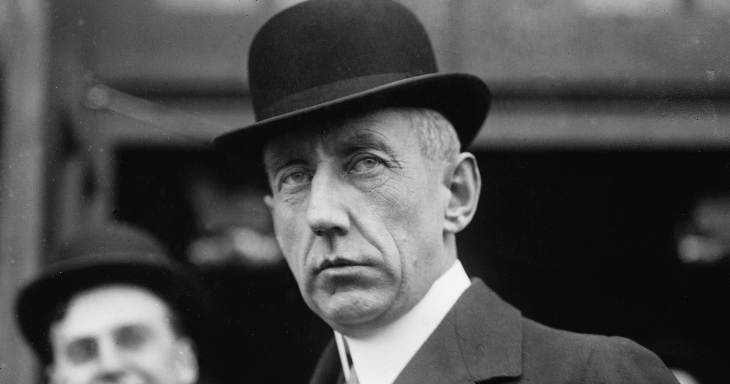
The correct answer is Roald Amundsen. The Norwegian explorer reached the South Pole on December 14, 1911, ahead of Robert Falcon Scott’s British expedition.
Roald Amundsen was the first man to reach the South Pole in 1911. The Norwegian explorer led an expertly planned Antarctic expedition that arrived at the pole on December 14, 1911, ahead of the British expedition led by Robert Falcon Scott. Amundsen’s success became one of the most famous achievements in polar exploration and one of the defining moments in the race to reach the southernmost point on Earth.
Roald Amundsen was born in Norway in 1872 and grew up during a period when polar exploration was a source of national pride and international attention. He was fascinated by the Arctic and Antarctic from a young age, and he studied the skills needed to survive in extreme cold. Before his South Pole expedition, he had already gained valuable polar experience. He was part of the Belgian Antarctic Expedition in the late 1890s and later became the first person to navigate the Northwest Passage by ship, a major achievement in Arctic exploration.
Amundsen originally planned to lead an expedition to the North Pole, but reports that Frederick Cook and Robert Peary had claimed to reach it changed his plans. Without widely announcing the change at first, Amundsen redirected his attention to Antarctica. His ship, the Fram, had been used in earlier Norwegian polar exploration, and it carried him and his men south for what would become a historic attempt on the South Pole.
The Norwegian expedition established its Antarctic base at Framheim, located in the Bay of Whales on the Ross Ice Shelf. The name Framheim means “home of the Fram.” This base gave Amundsen a starting point closer to the pole than Scott’s base at Cape Evans on Ross Island. Location alone did not guarantee success, but it gave the Norwegian team an important advantage when combined with careful planning and disciplined travel methods.
One of Amundsen’s greatest strengths was preparation. He understood the value of dog sleds, skiing, proper clothing, efficient food planning, and route marking. His team relied heavily on dogs, which were well suited for polar travel when handled by experienced men. Dogs could move quickly over snow and ice, pull sledges effectively, and reduce the physical strain on the explorers. Amundsen and his men were also skilled skiers, which helped them travel more efficiently than teams relying mainly on man-hauling.
Amundsen learned from Indigenous Arctic peoples, especially from Inuit techniques he had observed during earlier northern expeditions. He respected the practical knowledge of people who lived in cold environments and applied those lessons to clothing, travel, and survival. Fur clothing, dog handling, and efficient movement across snow all mattered in Antarctica, where poor decisions could quickly become deadly.
Route preparation was another key part of the expedition’s success. Before the final push to the pole, Amundsen’s team laid depots of food and supplies along the route. These depots reduced the amount the men had to carry at one time and gave them reliable points to return to on the journey back. They also marked their depots carefully with flags and markers across wide areas, making it less likely that they would miss them in poor visibility.
Amundsen’s final South Pole party included Roald Amundsen, Olav Bjaaland, Helmer Hanssen, Sverre Hassel, and Oscar Wisting. They left Framheim in October 1911 and traveled across the Ross Ice Shelf, climbed through the Transantarctic Mountains, and crossed the polar plateau. Their route included the Axel Heiberg Glacier, which allowed them to reach the high interior of Antarctica. The journey was brutal, but the team moved with remarkable efficiency.
On December 14, 1911, Amundsen and his men reached the South Pole. They planted the Norwegian flag and named the area Polheim, meaning “home at the pole.” To confirm their position, they spent time taking observations and surveying the area. Amundsen wanted to be certain that his claim would be accepted and that there would be no doubt about whether the team had truly reached the geographic South Pole.
Robert Falcon Scott’s British expedition reached the South Pole more than a month later, on January 17, 1912. Scott and his men found Amundsen’s tent and the Norwegian flag already there. Scott’s return journey ended in tragedy when he and his final companions died on the way back. The contrast between Amundsen’s successful return and Scott’s fatal expedition became one of the most discussed stories in exploration history.
Amundsen’s achievement was not the result of luck or a single bold decision. It came from experience, practical planning, respect for proven polar methods, and careful attention to logistics. His use of dog sleds, strong skiing skills, depot placement, route choice, and knowledge of cold-weather survival all contributed to the success of the expedition.
The answer is Roald Amundsen. He reached the South Pole on December 14, 1911, leading a Norwegian expedition from Framheim and arriving before Robert Falcon Scott’s British team. His careful planning and polar experience helped make the first successful journey to the South Pole one of the great milestones in exploration history.
Start a 10-question trivia challenge and see how many actors, singers, inventors, presidents, authors, athletes, and historical figures you know.
Start the Challenge