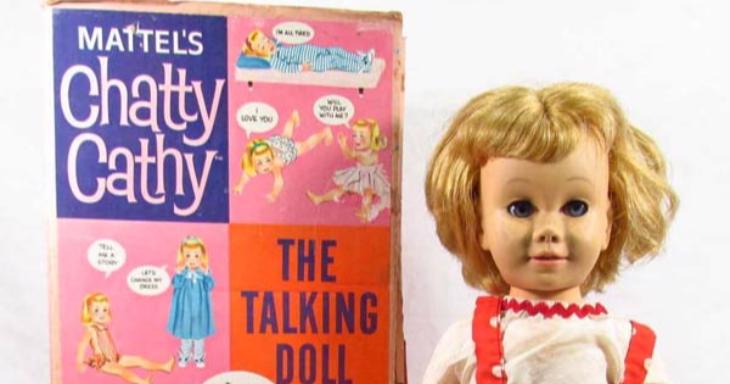
Which popular doll, introduced in 1959, was the first mass-produced doll to feature a pull-string activated voice box?
Chatty Cathy was the popular doll introduced in 1959 with a pull-string activated voice box.
Chatty Cathy is the answer. Mattel introduced the talking doll in 1959, giving the toy market a mass-produced doll with a pull-string voice box that could play recorded spoken phrases. Closely tied to classic toy history, early interactive doll marketing, and Mattel’s growing role in doll brands during the era, Chatty Cathy helped show how voice technology could make a doll feel more responsive and memorable.
Chatty Cathy and the 1959 Toy Market
Chatty Cathy arrived in 1959, a period when toy companies were finding new ways to make dolls more interactive. The doll stood out because it did more than sit, pose, or wear different outfits. Its ability to speak gave children a direct response after pulling the string. That feature helped separate Chatty Cathy from many ordinary dolls of the period.
The Pull-String Voice Box
The doll used a pull string to activate a built-in voice mechanism. When the string was pulled, Chatty Cathy played one of several recorded phrases. The important feature was the connection between a simple physical action and an audible response. That made the toy easy to understand while still feeling advanced for a mass-produced doll.
Mattel and the Talking Doll Idea
Mattel introduced Chatty Cathy and helped make the talking doll idea a major part of toy marketing. The company was also becoming strongly associated with major doll brands during this era. Ruth Handler was one of Mattel’s key figures in the company’s doll business, which helped shape the broader context around its toy strategy. Chatty Cathy fit that moment by combining character appeal with a mechanical voice feature.
A Classic Interactive Doll
Chatty Cathy became a classic interactive doll because its identity was built around talking. The pull-string voice box gave the toy a personality that children could trigger again and again. Its spoken phrases made it feel different from dolls that depended only on imagination, clothing, or accessories. In toy history, Chatty Cathy remains closely linked to Mattel, 1959, and the early success of mass-produced talking dolls.
Keep Playing Classic Toy Trivia
Take another quick challenge and see how many famous toys, games, and childhood favorites you can identify.
Start the Challenge