Classic Games & Toys Trivia Question
A nostalgic toy history question about glowing peg art and Lite-Brite.
Question

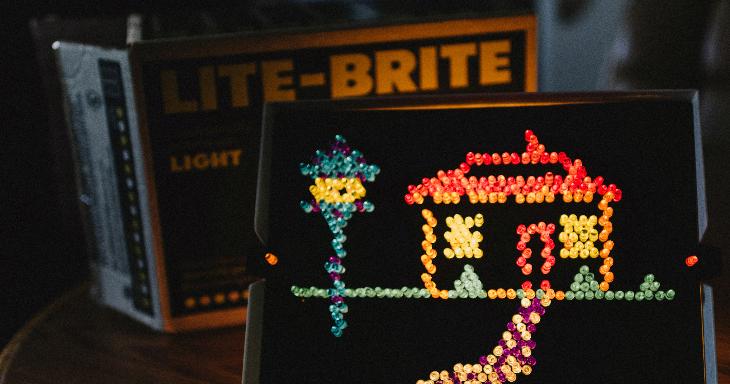
Which toy, which was introduced in the 1960s, allowed children to create glowing art by inserting small pegs into a lit board?

Correct Answer
Lite-Brite

The correct answer is Lite-Brite. Introduced in the 1960s, it allowed children to create glowing art by inserting small colored pegs into a lit board.

Like classic games and toys trivia?
Start a 10-question trivia challenge beginning with a question like this. No signup needed to begin.
Start the Challenge
Why Lite-Brite Is the Correct Answer

Lite-Brite is the toy introduced in the 1960s that allowed children to create glowing art by inserting small colored pegs into a lit board. First released by Hasbro in 1967, Lite-Brite became one of the most recognizable creative toys of its era. Its idea was simple but memorable: place translucent plastic pegs into a black paper-covered light box, turn on the bulb inside, and watch the design glow in bright colors.

The toy worked because of contrast. The front of the Lite-Brite board was covered with a sheet of dark paper. Children pushed colored pegs through the paper into small holes on the board. A light bulb behind the surface shone through the pegs, making each one appear like a tiny point of colored light. When many pegs were arranged together, they formed pictures, patterns, letters, animals, holiday scenes, or designs from a template. The dark background made the colors stand out sharply, giving even simple images a magical look.

Lite-Brite arrived at a time when toys were becoming more visually exciting and more closely tied to television advertising. The late 1960s toy market was full of products that promised creativity, movement, sound, or light. Lite-Brite stood out because it combined art with electricity in a way that felt safe and easy for children. It was not just a drawing toy, and it was not just a light. It gave children the feeling that they were making something that looked like a glowing sign or a miniature light display.

The original sets came with colored pegs and picture templates. A child could place a template over the board, follow the printed guide, and insert pegs in the right spots to create a finished image. That made the toy approachable even for children who did not feel confident drawing freehand. At the same time, kids could also ignore the templates and make their own designs. This mix of guided play and open-ended creativity helped Lite-Brite last for decades.

The pegs themselves became part of the toy’s identity. They were small, bright, and easy to sort by color. Generations of families remember containers or trays filled with red, blue, green, yellow, orange, pink, purple, and clear pegs. The physical act of pushing the pegs into the board was satisfying, and the final reveal looked different once the light was turned on. That before-and-after effect made the toy feel more rewarding than a flat drawing.

Lite-Brite also fit well into the visual culture of the 1960s and 1970s. Bright colors, bold shapes, light-up signs, and graphic patterns were common in advertising, television, and pop design. The toy let children create their own version of that style at home. Its glowing pictures could resemble marquee lights, stained glass, or early pixel art. Long before home computers made pixel images familiar, Lite-Brite gave children a hands-on way to build pictures from individual colored points.

The light source in early versions was an incandescent bulb, which meant the toy also had a warm glow that many people associate with childhood playrooms and bedrooms. Later versions changed with safety standards, design updates, and newer lighting technology. Some modern versions use LEDs and updated boards, but the basic concept remains the same. Small colored pegs are arranged on a board, and light turns them into glowing artwork.

Lite-Brite has stayed popular because it is easy to understand and strongly nostalgic. Many toys from the 1960s depended on a gimmick that faded quickly, but Lite-Brite’s central idea still works. It encourages pattern recognition, color choice, hand-eye coordination, and creativity without needing complicated instructions. It also produces a finished object that looks impressive in a darkened room.

More Classic Games & Toys Trivia Questions

Ready for another challenge?

Start a 10-question trivia challenge and see how many classic toys, board games, puzzles, and childhood favorites you know.

Start the Challenge