American History Trivia Question
A space history question about Apollo 11 and the astronaut who stayed in lunar orbit.
Question

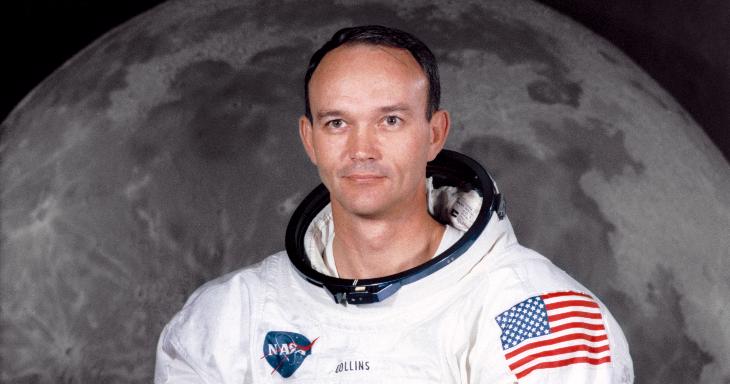
Which member of the Apollo 11 mission did not set foot on the Moon?

Correct Answer
Michael Collins

The correct answer is Michael Collins. During Apollo 11, Neil Armstrong and Buzz Aldrin walked on the Moon while Collins remained in lunar orbit aboard the Command Module Columbia.

Like American history trivia?
Start a 10-question trivia challenge beginning with a question like this. No signup needed to begin.
Start the Challenge
Why Michael Collins Is the Correct Answer

Michael Collins was the member of the Apollo 11 mission who did not set foot on the Moon. While Neil Armstrong and Buzz Aldrin descended to the lunar surface in the Lunar Module Eagle on July 20, 1969, Collins remained in orbit around the Moon aboard the Command Module Columbia. His role was essential to the success of the mission, even though he never walked on the lunar surface.

Apollo 11 had three astronauts, and each had a clearly defined job. Armstrong was the mission commander, Aldrin was the lunar module pilot, and Collins was the command module pilot. Once Apollo 11 reached lunar orbit, Armstrong and Aldrin entered Eagle and separated from Columbia. Collins stayed behind in the command module, circling the Moon while the other two astronauts prepared for the landing. He was responsible for maintaining Columbia, tracking the lunar module, and being ready to rendezvous with Eagle after the Moonwalk portion of the mission was complete.

Collins’ job required tremendous skill and discipline. The command module was the only part of the spacecraft that would return to Earth, so Columbia had to remain fully operational. If Armstrong and Aldrin successfully lifted off from the Moon but Columbia was not ready or properly positioned, the crew could not reunite. Collins had to manage navigation, systems checks, communications, and orbital timing. His work was quieter than the Moon landing itself, but it was just as critical.

During parts of each orbit, Collins passed behind the far side of the Moon. When that happened, he lost radio contact with Earth and with Armstrong and Aldrin. For those stretches, he was completely cut off from every other human being. This led to a common description of Collins as one of the loneliest people in history, though Collins himself did not describe the experience in a sad or frightening way. He later wrote that he felt very much part of the mission and focused on the tasks he needed to complete.

The Apollo 11 landing itself took place in the Sea of Tranquility. Armstrong became the first human to step onto the Moon, followed soon after by Aldrin. While they collected samples, set up experiments, took photographs, and planted the American flag, Collins continued orbiting above them. He could not see the astronauts on the surface with his own eyes, but he knew that his timing and readiness were vital to bringing them home.

After Armstrong and Aldrin completed their time on the Moon, they launched from the surface in the ascent stage of Eagle. Collins then performed the rendezvous and docking process that brought the spacecraft back together. Once the lunar module was docked with Columbia, Armstrong and Aldrin transferred back into the command module. The lunar module was later released, and all three astronauts began the return journey to Earth together.

Michael Collins had already flown in space before Apollo 11. He was part of the Gemini 10 mission in 1966, where he performed spacewalks and helped test skills that later became important for Apollo missions. His selection for Apollo 11 reflected his experience, technical ability, and reliability. The command module pilot role was not a consolation position. It demanded deep knowledge of the spacecraft and the ability to operate alone under pressure.

Collins was sometimes called “the forgotten astronaut” because Armstrong and Aldrin received most of the public attention after the Moon landing. That nickname can be misleading, since people who understand Apollo 11 recognize how important his role was. The mission could not have succeeded with only the two men who walked on the Moon. It required the astronaut who stayed in orbit, protected the return vehicle, and made sure the crew could come home.

After Apollo 11, Collins did not fly in space again. He later worked in public service and became director of the National Air and Space Museum in Washington, D.C. He also wrote about his experiences with clarity and modesty, helping later generations understand the human side of spaceflight.

The correct answer is Michael Collins. He did not walk on the Moon, but his work aboard Columbia made Armstrong and Aldrin’s lunar landing, and their safe return, possible.

More American History Trivia Questions

Ready for another challenge?

Start a 10-question trivia challenge and see how many famous events, documents, presidents, and historic moments you know.

Start the Challenge