Nature & Animals Trivia Question
An animal biology question about bats, true flight, wings, and gliding mammals.
Question

What are the only mammals that can fly?

Correct Answer
Bats

The correct answer is bats. Bats are the only mammals capable of true powered flight, while animals such as flying squirrels and sugar gliders can only glide.

Like nature and animals trivia?
Start a 10-question trivia challenge beginning with a question like this. No signup needed to begin.
Start the Challenge
Why Bats Is the Correct Answer

Bats are the only mammals that can fly. They are the only mammals capable of true flight, meaning they can actively flap their wings to lift themselves, steer, climb, dive, and stay airborne under their own power. Other animals sometimes described as flying mammals, such as flying squirrels or sugar gliders, can glide through the air, but they cannot produce powered flight the way bats can.

The difference between true flight and gliding is important. A gliding mammal launches from a high place and uses loose skin or a membrane to slow its fall and travel from one tree or surface to another. Flying squirrels are a good example. They stretch a flap of skin between their front and back legs, then glide downward through the air. They can steer, but they cannot take off from flat ground and fly upward by flapping. Bats can. That is what makes them unique among mammals.

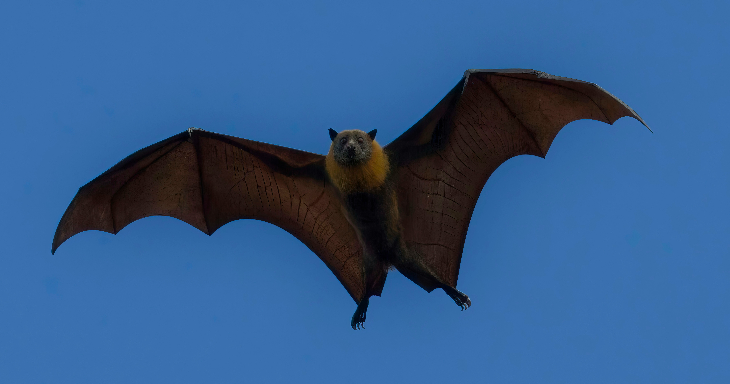
Bat wings are built very differently from bird wings. A bird wing is supported mainly by the arm and hand bones, with feathers forming the flight surface. A bat wing is formed from elongated finger bones covered by a thin, flexible membrane of skin. The bat’s fingers spread out inside the wing like the ribs of an umbrella. This structure gives bats remarkable control in the air. They can adjust the shape of the wing while flying, which helps them turn quickly, hover briefly, and maneuver through forests, caves, and tight spaces.

Because their wings are made from modified hands, bats are sometimes described as flying with their fingers. Their scientific order, Chiroptera, comes from Greek roots meaning “hand wing.” That name fits them well. The bat wing is one of the clearest examples of how a mammal’s body can adapt for a completely different way of moving.

Many bats are nocturnal, meaning they are active mostly at night. Night flight gives them access to food sources with less competition from many daytime animals. Some bats feed on insects, while others eat fruit, nectar, pollen, fish, frogs, or small animals. Insect-eating bats can catch mosquitoes, moths, beetles, and other flying insects while moving quickly through the dark.

One of the best-known bat abilities is echolocation. Many bats make high-frequency sounds and listen for the returning echoes. Those echoes help them locate insects, avoid obstacles, and navigate in darkness. Echolocation is so precise that some bats can detect tiny prey in midair while flying at night. Not all bats rely on echolocation in the same way, and some fruit bats depend more heavily on sight and smell, but the ability remains one of the most famous bat adaptations.

Bats are found on every continent except Antarctica. They live in forests, deserts, grasslands, caves, cities, tropical islands, and agricultural areas. Some roost in caves or hollow trees, while others use buildings, bridges, mines, or large leaves. Their variety is enormous. There are tiny bats that weigh less than a coin and large flying foxes with wingspans of several feet.

Bats also play important ecological roles. Insect-eating bats help control insect populations. Fruit bats spread seeds, which helps forests regenerate. Nectar-feeding bats pollinate plants, including some that are important to local ecosystems and agriculture. Their nighttime activity often goes unnoticed, but they support many natural systems.

Despite their importance, bats are often misunderstood. Their unusual appearance, nocturnal habits, and connection with caves have made them the subject of myths and fear. In reality, most bats avoid people and spend their lives feeding, roosting, raising young, and moving through the night. Like all wild animals, they should not be handled, but they are valuable parts of the environment.

The answer is bats. They are the only mammals that can fly because they have true powered flight, using wings made from elongated finger bones and a thin skin membrane. Gliding mammals can only coast through the air, but bats can flap, steer, and remain airborne, making them the only true flying mammals.

More Nature & Animals Trivia Questions

Ready for another challenge?

Start a 10-question trivia challenge and see how many wildlife, birds, insects, plants, oceans, forests, and natural wonders you know.

Start the Challenge