Nature & Animals Trivia Question
A natural wonders question about the Great Barrier Reef and the world’s largest coral reef system.
Question

What massive structure, stretching over 2,300 kilometers, is considered the largest living structure on Earth?

Correct Answer
Great Barrier Reef

The correct answer is the Great Barrier Reef. Stretching over 2,300 kilometers off Australia’s northeastern coast, it is widely considered the largest living structure on Earth.

Like nature and animals trivia?
Start a 10-question trivia challenge beginning with a question like this. No signup needed to begin.
Start the Challenge
Why the Great Barrier Reef Is the Correct Answer

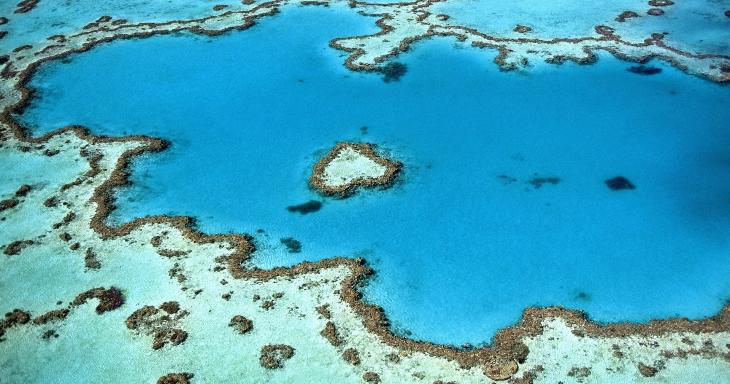
The Great Barrier Reef is the massive structure stretching over 2,300 kilometers that is often considered the largest living structure on Earth. Located off the northeastern coast of Australia, it is the world’s largest coral reef system and one of the most famous natural wonders on the planet. It runs along the coast of Queensland in the Coral Sea and is so large that parts of it can be seen from space.

The Great Barrier Reef is not one single reef. It is a vast system made up of thousands of individual reefs and hundreds of islands. Together, they form a connected marine landscape filled with coral, fish, mollusks, sea turtles, sharks, rays, sea snakes, seabirds, and many other forms of life. Its scale is difficult to picture because it stretches for a distance longer than many countries. At over 2,300 kilometers, or about 1,400 miles, it extends from the waters near the Torres Strait in the north down toward the area near Bundaberg in the south.

Coral reefs are built by tiny animals called coral polyps. These small creatures live in colonies and produce hard calcium carbonate skeletons. Over long periods of time, those skeletons build up and create reef structures. The living coral grows on top of older coral skeletons, slowly forming the complex shapes that provide shelter for marine life. Although coral may look like rock or plant life, it is made by living animals, which is why the Great Barrier Reef is often described as a living structure.

The reef’s beauty comes from both its size and its biodiversity. Coral reefs are sometimes called the rainforests of the sea because they support so many species in a relatively small area. The Great Barrier Reef is home to a stunning variety of hard and soft corals, along with clownfish, parrotfish, giant clams, reef sharks, manta rays, dugongs, and several species of sea turtles. Many animals depend on the reef for food, shelter, breeding grounds, or protection from predators.

The Great Barrier Reef also has deep cultural importance. Aboriginal and Torres Strait Islander peoples have lived with and cared for the reef and surrounding sea country for thousands of years. Their knowledge, stories, and traditions are closely tied to the coastal and marine environments of the region. The reef is not only a natural landmark, but also part of a long human history connected to fishing, navigation, ceremony, and stewardship.

In 1981, the Great Barrier Reef was listed as a UNESCO World Heritage Site, recognizing its global importance. It is one of the best-known examples of Earth’s natural heritage because of its size, beauty, ecological richness, and scientific value. Researchers study the reef to better understand marine ecosystems, coral growth, ocean temperatures, biodiversity, and the effects of environmental change.

The reef faces serious threats. Rising ocean temperatures can cause coral bleaching, a process in which stressed corals lose the algae that help feed them and give them much of their color. Bleached coral is not necessarily dead, but it is weakened and more vulnerable. Severe or repeated bleaching events can lead to coral death. Other pressures include water pollution, storm damage, coastal development, crown-of-thorns starfish outbreaks, and the broader effects of climate change.

Despite those challenges, the Great Barrier Reef remains one of the most extraordinary living systems on Earth. Its sheer size, its delicate coral formations, and its role as a habitat for thousands of species make it a symbol of both natural wonder and environmental responsibility. It shows how tiny living organisms, working over immense stretches of time, can build something visible on a planetary scale.

The answer is The Great Barrier Reef. It is the vast coral reef system off Australia’s coast, stretching more than 2,300 kilometers and widely recognized as the largest living structure on Earth.

More Nature & Animals Trivia Questions

Ready for another challenge?

Start a 10-question trivia challenge and see how many wildlife, birds, insects, plants, oceans, forests, and natural wonders you know.

Start the Challenge