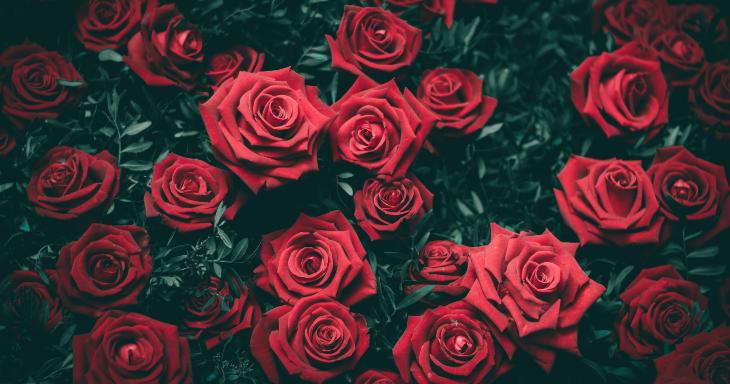
The correct answer is California. Within the United States, California is the state most associated with commercial rose and cut-flower production for Valentine’s Day.
California is the U.S. state most commonly associated with producing the most roses for Valentine’s Day. The question is best understood as a domestic U.S. flower-production question, because many roses sold in the United States for Valentine’s Day are imported from other countries. Within the United States, though, California has long been the leading state for commercial cut-flower production, helped by its mild climate, large agricultural industry, and long growing seasons.
Roses are one of the strongest symbols of Valentine’s Day in American culture. Red roses in particular are linked with love, romance, affection, and courtship. By the 20th century, giving a dozen red roses had become one of the most recognizable Valentine’s Day traditions. Florists, supermarkets, online flower services, and roadside sellers all feature roses heavily in February because shoppers instantly connect them with the holiday.
California became important to the American flower industry because its climate allows many flowers to be grown commercially with fewer weather interruptions than in colder states. Coastal areas, especially in Southern California and parts of the Central Coast, offer moderate temperatures, sunlight, and growing conditions that have supported flower farms and greenhouses for generations. Roses need careful temperature control, good light, proper pruning, and fast handling after cutting. California’s climate and agricultural infrastructure made it one of the best places in the country for that kind of production.
The state’s flower industry includes more than roses. California growers have produced carnations, lilies, chrysanthemums, orchids, gerbera daisies, and many other cut flowers. Still, roses have a special place because of Valentine’s Day. The demand spike before February 14 is enormous. Growers, wholesalers, shippers, and florists all have to plan far ahead so roses are cut, cooled, packed, shipped, and arranged at the right time.
Fresh roses are highly perishable. Once cut, they need to move through a cold supply chain to preserve quality. Temperature matters because heat can cause flowers to open too quickly or wilt before reaching customers. Roses are usually harvested before fully opening, then stored and transported under controlled conditions. Florists often receive them in tight bud form and let them open gradually before sale or delivery. That timing is one reason Valentine’s Day roses require such precise coordination.
The broader Valentine’s Day rose market is not limited to American-grown flowers. In modern times, a large share of roses sold in the United States comes from South America, especially Colombia and Ecuador. Those countries have high-altitude growing regions near the equator, where steady daylight and cool nights help produce long-stem roses. Air freight allows imported flowers to reach U.S. wholesalers quickly, especially through major distribution hubs such as Miami. This has changed the American rose business, making imports a major part of the Valentine’s supply.
Even with that import competition, California remains the expected answer when the question asks for a U.S. state. Its long history of flower farming, greenhouse production, and cut-flower distribution makes it the best-known domestic producer. California-grown flowers also have an advantage in some regional markets because they can travel shorter distances, especially to customers in the western United States. Shorter shipping routes can help preserve freshness and reduce handling time.
The history of roses in California also fits the state’s larger agricultural identity. California is known for growing a wide range of specialty crops, from fruits and nuts to vegetables, nursery plants, and flowers. Its farms often serve national markets, not just local ones. The flower business is part of that same system of specialized production, seasonal demand, and large-scale distribution.
Valentine’s Day is the busiest rose holiday of the year, but roses are also popular for anniversaries, weddings, Mother’s Day, birthdays, funerals, and formal events. The flower’s meaning can change depending on color. Red roses usually suggest romantic love, pink roses often suggest admiration or gratitude, white roses are commonly linked with purity or remembrance, and yellow roses are often associated with friendship. For Valentine’s Day, though, red remains the dominant color.
The answer is California. It is the U.S. state most associated with domestic rose production for Valentine’s Day, even though the modern American rose market also depends heavily on imported flowers from major growing regions outside the United States.
Start a 10-question trivia challenge and see how many wildlife, birds, insects, plants, oceans, forests, and natural wonders you know.
Start the Challenge