Nature & Animals Trivia Question
A wildlife migration question about monarch butterflies, Canada, Mexico, and overwintering forests.
Question

What insect migrates over 2,000 miles from Canada to Mexico each fall, where it overwinters and begins its reproductive cycle?

Correct Answer
Monarch butterfly

The correct answer is the monarch butterfly. Each fall, monarch butterflies migrate over 2,000 miles from Canada and the northern United States to overwintering forests in central Mexico.

Like nature and animals trivia?
Start a 10-question trivia challenge beginning with a question like this. No signup needed to begin.
Start the Challenge
Why Monarch Butterfly Is the Correct Answer

Monarch butterfly is the insect that migrates over 2,000 miles from Canada to Mexico each fall, where it overwinters and later begins the next stage of its reproductive cycle. This is one of the most remarkable migrations in North America because it is made by a delicate insect that weighs less than a gram, yet can travel distances that seem more suited to birds or large mammals.

The monarch butterfly is best known for its orange-and-black wings, but its migration is what makes it truly extraordinary. Each fall, monarchs from southern Canada and the northern United States begin moving south as temperatures drop and daylight changes. Many of them travel to a small region in the mountains of central Mexico, especially in the oyamel fir forests of Michoacán and the State of Mexico. These mountain forests provide the cool, sheltered conditions the butterflies need to survive the winter.

The monarchs that make this long trip are often called the super generation. Unlike summer monarchs, which usually live only a few weeks, this generation can live for several months. That longer lifespan allows them to travel south, overwinter in Mexico, and begin the northward cycle when conditions improve. They do not reproduce immediately during the fall migration. Instead, they conserve energy, cluster together in trees, and wait through the winter months.

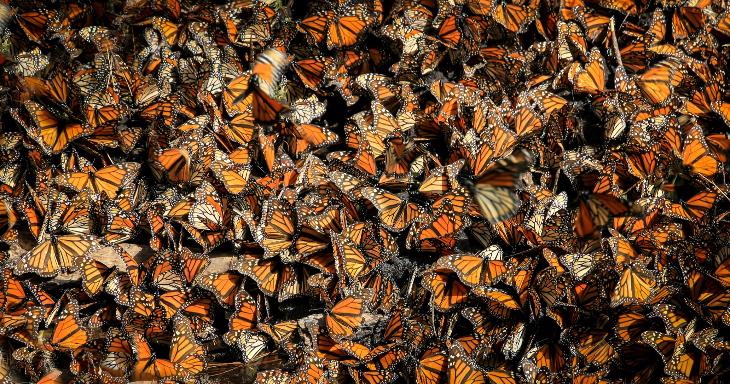
The sight of overwintering monarchs in Mexico is famous because the butterflies gather in enormous numbers. They hang from tree branches in dense clusters, sometimes making the trees appear covered in orange and black. When the sun warms them, they may lift into the air in great clouds. The colonies are not just beautiful. They are also fragile. The butterflies depend on a specific type of forest habitat, and changes to that habitat can threaten their survival.

In spring, the monarchs begin moving north again. The same butterflies that overwintered in Mexico start the return journey, but they do not make it all the way back to Canada. Instead, they mate and lay eggs on milkweed plants in the southern United States. Their offspring continue the trip north in stages. Several generations are born and die before monarchs reach the northern parts of their range again. This means the butterflies that leave Canada in the fall are not the same individuals whose parents or grandparents left Mexico in spring.

Milkweed is essential to the monarch life cycle. Female monarchs lay their eggs on milkweed because monarch caterpillars feed on it. Without milkweed, the caterpillars cannot develop normally. The plant also gives monarchs a chemical defense. Compounds from milkweed make the caterpillars and adult butterflies unpleasant or unsafe for many predators to eat. Birds that learn this connection often avoid monarchs after tasting one.

The monarch’s migration has long fascinated scientists because no single butterfly completes the entire round trip from Canada to Mexico and back. The route is passed across generations, yet the fall generation somehow finds its way to overwintering areas it has never visited before. Scientists believe monarchs use a combination of environmental cues, including the sun’s position, internal biological rhythms, temperature, and possibly magnetic information.

Monarch populations have faced serious pressure from habitat loss, reduced milkweed availability, pesticide use, climate shifts, and degradation of overwintering forests. Conservation efforts often focus on planting native milkweed, protecting nectar plants, reducing harmful pesticide exposure, and preserving the Mexican forest habitats where millions of monarchs gather each winter.

The answer is Monarch butterfly. Its fall migration from Canada and the northern United States to central Mexico is one of the best-known insect migrations in the world, and its life cycle depends on an unusual chain of generations, milkweed plants, and protected overwintering forests.

More Nature & Animals Trivia Questions

Ready for another challenge?

Start a 10-question trivia challenge and see how many wildlife, birds, insects, plants, oceans, forests, and natural wonders you know.

Start the Challenge