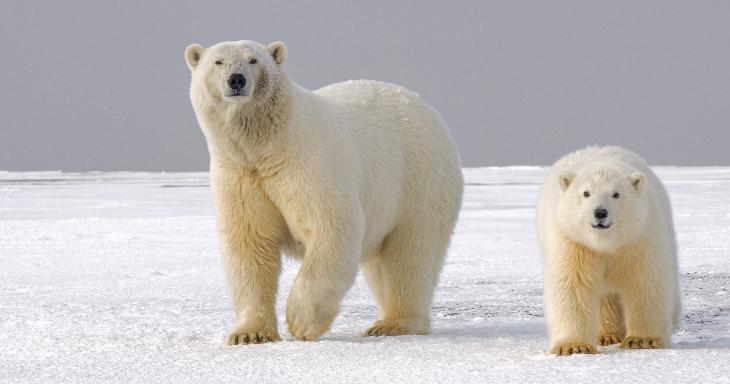
The correct answer is black. Polar bears may look white because of their fur, but the skin underneath is black.
Black is the color of a polar bear’s skin. Although polar bears appear white because of their thick fur, the polar bear skin underneath is actually black skin. This surprising contrast is one of the most interesting adaptations of the polar bear, a large Arctic predator built to survive in one of the coldest environments on Earth.
Polar bears live across the Arctic, including areas around Canada, Alaska, Greenland, Norway, and Russia. Their world is made up of sea ice, snow, cold water, and long periods of freezing temperatures. To survive there, polar bears need several layers of protection against the cold. Their black skin, dense fur, and thick fat layer all work together to help them stay warm.
The white appearance of a polar bear comes from its fur, not its skin. Each hair is often described as transparent hair, rather than truly white. The hairs are hollow and translucent, which means they scatter and reflect visible light. When sunlight hits the fur, the scattered light makes the bear look white or creamy white. This coloring also provides excellent camouflage on snow and sea ice, helping polar bears blend into their surroundings while hunting seals.
The black skin underneath the fur may help with absorbing sunlight. Dark colors absorb more light energy than pale colors, so black skin can help the bear take in warmth when sunlight reaches through the fur. In the Arctic, any extra heat can be useful, especially during long periods spent on sea ice. The fur provides the outer protection, while the skin and fat help retain body heat.
Polar bears also rely heavily on insulation. Their fur is made up of a dense undercoat and longer guard hairs that trap air close to the body. This trapped air reduces heat loss and helps keep the bear warm even in freezing wind. Beneath the skin is a thick layer of fat, which can be several inches deep. This fat layer is especially important when polar bears swim in icy water or go long periods without eating.
The combination of white-looking fur and black skin gives the polar bear two advantages at once. The fur helps it disappear against snow and ice, while the dark skin may help absorb warmth. That makes the animal well suited to life in a bright, cold environment where both hunting success and heat conservation matter. A polar bear that blends into the ice can approach seals more effectively, and a bear that conserves heat can survive longer in harsh conditions.
Polar bears are marine mammals because they spend much of their lives on or near sea ice and depend heavily on the ocean for food. Their main prey is seals, especially ringed seals and bearded seals. Polar bears often wait near breathing holes in the ice or stalk seals resting on the surface. Their light-colored fur helps conceal them in these snowy hunting areas.
A polar bear’s fur can sometimes look yellowish, grayish, or even slightly brown depending on lighting, age, season, and dirt or oils in the coat. In zoos or warmer, damp conditions, the hollow hairs can even take on a greenish tint if algae grow inside them. That does not change the basic fact that the skin underneath remains black.
The answer is black. Polar bears may look white because their transparent hair reflects light and helps with Arctic camouflage, but their skin underneath is black. Along with dense fur and a thick layer of fat, that black skin is part of the polar bear’s remarkable system for staying warm in freezing Arctic conditions.
Start a 10-question trivia challenge and see how many wildlife, birds, insects, plants, oceans, forests, and natural wonders you know.
Start the Challenge