Nature & Animals Trivia Question
A marine wildlife question about sea otters, kelp forests, tool use, and shellfish.
Question

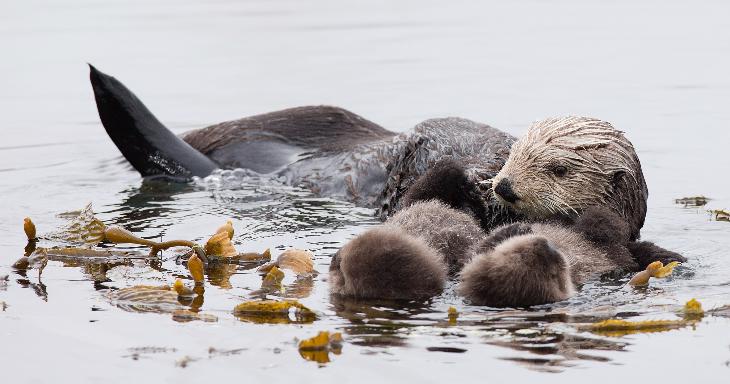
Which marine mammal, often seen floating on its back near kelp forests, is known to use tools such as rocks to crack open shellfish?

Correct Answer
Sea otter

The correct answer is sea otter. Sea otters are marine mammals known for floating on their backs and using rocks as tools to crack open shellfish such as clams.

Like nature and animals trivia?
Start a 10-question trivia challenge beginning with a question like this. No signup needed to begin.
Start the Challenge
Why Sea Otter Is the Correct Answer

Sea otter is the marine mammal often seen floating on its back near kelp forests and known to use tools such as rocks to crack open shellfish. Sea otters are among the best-known examples of tool use in animals, and their feeding behavior is one of the reasons they are so closely associated with the rocky coasts and kelp forests of the North Pacific.

Sea otters live along coastal waters, especially in parts of Alaska, British Columbia, Washington, California, and eastern Russia. Unlike seals, sea lions, and whales, sea otters do not have a thick layer of blubber to keep them warm. Instead, they depend on extremely dense fur, one of the densest coats of any mammal. Their fur traps air close to the skin, helping insulate them from cold ocean water. Because keeping warm takes so much energy, sea otters need to eat a large amount of food each day.

Their diet includes clams, mussels, crabs, snails, abalone, and sea urchins. Many of these animals have hard shells, which makes the sea otter’s tool use especially important. A sea otter may dive to the seafloor, collect a shellfish or urchin, and bring it back to the surface. Once there, it often floats on its back, places a rock on its chest, and pounds the shellfish against the rock until it breaks open. In other cases, the otter may use a rock to hammer directly against prey attached to underwater surfaces.

The image of a sea otter floating on its back is closely tied to how it feeds. Its body works almost like a floating table. While lying belly-up at the surface, the otter can hold prey with its front paws, brace a rock on its chest, and crack open food while remaining in the water. This position also lets the otter groom, rest, and sometimes hold food while drifting among kelp. Sea otters have loose skin under their forearms that forms pocket-like folds, which can help them carry food or a favored rock.

The use of rocks to open shellfish makes sea otters unusual among marine mammals. Many animals solve food problems with strength, teeth, or claws, but sea otters use objects from their environment in a deliberate way. That behavior shows planning, dexterity, and learning. Young sea otters often learn feeding skills by watching their mothers. Different populations may specialize in different foods depending on what is available locally, and some otters become especially skilled at handling certain prey.

Sea otters also play a major role in kelp forest ecosystems. They are often described as a keystone species because their presence can strongly affect the health of the environment around them. One of their most important foods is the sea urchin. Sea urchins eat kelp, and when urchin populations grow unchecked, they can graze down entire kelp forests, leaving behind barren seafloor with far less habitat for fish and other marine life.

By eating sea urchins, sea otters help keep urchin numbers under control. That allows kelp forests to grow more densely. Healthy kelp forests provide shelter and feeding areas for fish, invertebrates, seabirds, and many other animals. Kelp also helps buffer waves, stores carbon, and supports coastal biodiversity. In this way, the sea otter’s appetite has effects far beyond its own survival.

Sea otters were once heavily hunted for their valuable fur, and their populations declined sharply. In some places they disappeared entirely. Conservation efforts helped them recover in parts of their range, but they still face threats, including oil spills, disease, habitat pressure, pollution, food shortages, and conflicts with fisheries. Their dependence on clean coastal waters and healthy food webs makes them an important indicator of marine ecosystem health.

The answer is sea otter. This North Pacific marine mammal is famous for floating on its back, living among kelp forests, and using rocks to crack open shellfish such as clams. Its feeding habits also help protect kelp forests by reducing sea urchin pressure, making the sea otter one of the most important animals in its coastal habitat.

More Nature & Animals Trivia Questions

Ready for another challenge?

Start a 10-question trivia challenge and see how many wildlife, birds, insects, plants, oceans, forests, and natural wonders you know.

Start the Challenge