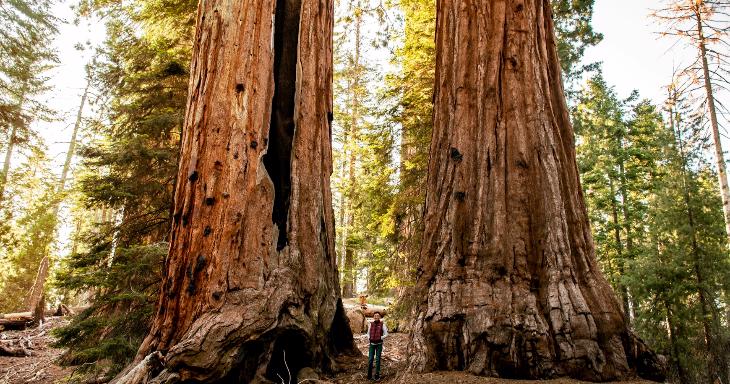
What large North American tree is famous for having the thickest bark of any tree species?
The correct answer is giant sequoia. This massive Sierra Nevada tree is famous for extremely thick bark that helps protect it from fire.
The giant sequoia is the answer. Giant sequoias, scientifically known as Sequoiadendron giganteum, are massive North American trees native to groves on the western slopes of California’s Sierra Nevada, where their fire-resistant bark, huge trunk volume, long life span, and role in forest ecology make them one of the most distinctive trees on Earth.
The Giant Sequoia
Giant sequoias grow naturally in a limited range of California’s Sierra Nevada. They are among the largest trees in the world by overall trunk volume, which separates them from many other tall or wide tree species. Their massive trunks and long lives make them strongly associated with old-growth California forests.
Why Its Bark Is So Thick
The giant sequoia is famous for extremely thick bark that helps protect the tree from fire damage. That bark can insulate the living tissue beneath it when low- to moderate-intensity fires move through a grove. Fire resistance matters because fire has long been part of the Sierra Nevada forest environment where giant sequoias grow.
A Tree Built for Size and Longevity
Giant sequoias are not just tall trees; they are especially known for their enormous trunk mass. Their size develops over many centuries, and their long life span allows them to keep adding wood year after year. The combination of huge diameter, thick bark, and durable growth makes them one of the most massive tree species on the planet.
Giant Sequoia Versus Coast Redwood
Giant sequoias are sometimes confused with coast redwoods because both are famous California trees. Coast redwoods are generally known for reaching greater heights, while giant sequoias are best known for their massive trunks and extremely thick bark. That distinction helps explain why the giant sequoia is the correct answer for the tree famous for the thickest bark.
Ready for another challenge?
Start a 10-question challenge and test your knowledge of wildlife, birds, insects, plants, oceans, forests, and natural wonders.
Start the Challenge